Showing posts with label Bangladesh. Show all posts

Thursday, 30 January 2014

East West University

East West University
East West University is a private university located in Dhaka, Bangladesh. It was established in 1996 by the Private University Act, 1992. Its own campus is in Jahrul Islam City, Aftabnagar.

In 2012 the university shifted to new buildings on a plot of about 8 bighas or 2.23 acre at Aftabnagar near Banasree and Bangladesh Television. It has a floor space of about 450,000 square feet and it’s an Architectural Wonder. Now East West University has 6000 students under three faculties.

East West University Faculty Building

Architectural style: Modern
Type: Educational Institution
Date: 2008-2012
Area: 450,000 Sq. Ft.
Location: Aftabnagar, Banasree, Bangladesh.


North South University

North South University
North South University is the first government approved private university of Bangladesh. North South University was established by a group of philanthropists, industrialists, bureaucrats and academics. The government of Bangladesh approved the establishment of North South University in 1992 under Private University Act 1992. The foundation of the campus was laid on January 30, 2003. Classes started in the permanent campus from June 9, 2009.
North South University inner look

This campus serves 4,000 to 12,000 students with amenities and facilities. It contains six buildings with three basements on six acres of land having 125,000 square feet of floor space. The units are Administrative building, North Academic Building, South Academic Building, Open Theatre Building, Library and the Auditorium. The School of Business and the School of Arts and Social Sciences are located in North Academic Building and the School of Engineering and Applied Sciences and the School of Life Sciences are located in South Academic Building. The resource lab is located in library building level 6.

Architect: Professor Sarat Das
Architectural style: Modern
Type: Educational Institution
Date: 2003-2009
Cost: Tk 378 crore
Area: 125,000 Sq. Ft.

Thursday, 9 January 2014

United International University

United International University
United International University is one of the top University in Bangladesh. This university vision is quest for excellence and this way they are working. Their mission is to develop a top University in South Asia and they will build a campus which area is about 20 biga.
Now it has a nice campus in Dhanmondi. The name of architect is Nahaj Khalil. Its work was start between September 2003 to July 2005. Neptune Properties Ltd. Develop this nice building. It’s a educational institution. Its total cost is approximately about 130 core BTK, Containing about 80,000 sq. ft. floor space, the campus has 8 floors with two basements. Containing about 80,000 sq. ft. floor space, the campus has 8 floors with two basements.


Architect: Nahaj Khalil
Type: Educational Institution
Date: 2003-2005
Cost: Tk 130 core
Area: 80,000 sq. ft. 
Architectural style: Modern.
Location:Dhanmondi,Dhaka, Bangladesh.

Wednesday, 25 August 2010

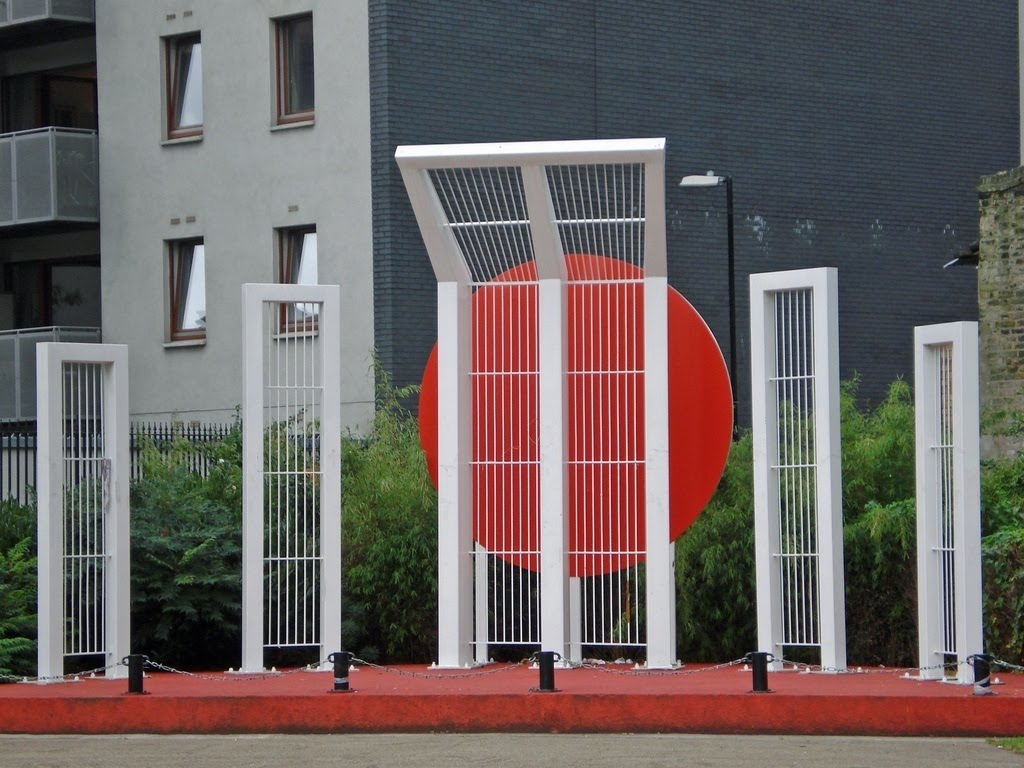
Shaheed Minar


The Shaheed Minar is a national monument in Dhaka, Bangladesh, established to commemorate those killed during the Language Movement demonstrations of 1952. On February 21, 1952, dozens of students and political activists were killed when the Pakistani police force opened fire on Bengali protesters who were demanding equal status to their native tongue, Bangla. The massacre occurred near Dhaka Medical College and Ramna Park in Dhaka.
Famous architect Hamidur Rahman created the design of Shaheed Minar in 1957. Dr. Sayeed Haider, was the main planner and the designer of the first Shaheed Minar. The foundation stone of this Shaheed Mianar was laid on February 21, 1956. Hamidur Rahman’s model was a huge complex on a large area of land in the yard of Dhaka Medical College Hostel.
The enormous design included a half-circular column to symbolize the mother with her fallen sons standing on the monument's central dais. Yellow and deep blue pieces of stained glass, symbolizing eyes reflecting the sun, were also to be placed in the columns. The marble floor was designed to reflect the moving shadows of the columns. The basement of the Minar also included a 1,500-square-foot fresco depicting the history of the language movement. A railing decorated with Bangla alphabet was to be constructed in front.
The Minar was severely damaged during the Bangladesh Liberation War in 1971. The columns were destroyed during the fighting. The Pakistani Army crushed the Minar. After Liberation War the Minar build again in 1973 by the period of Awami League government.

Architect: Hamidur Rahman
Construction supervisor: Hamidur Rahman and Novera Ahmed.
Planner & designer: Dr. Sayeed Haider
Date: 1957-1973
Location: Dhaka
Type: monument

National Parliament House

National Assembly Building of Bangladesh
Jatiyo Sangsad Bhaban is the National Assembly Building of Bangladesh, located in the capital Dhaka. It was created by architect Louis I. Kahn and is one of the largest legislative complexes in the world. It houses all parliamentary activities of Bangladesh
Parliament House Lake
The Building consists of nine individual blocks: the eight peripheral blocks rise to a height of 110' while the central octagonal block rises to a height of 155'. All nine blocks include different groups of functional spaces and have different levels, inter-linked horizontally and vertically by corridors, lifts, stairs, light courts, and circular areas. The Parliament House is divided into three plaza and those are The Main Plaza, The South Plaza and Presidential Plaza. The most important part of the Main Plaza is the Parliament Chamber, which can house up to 354 Members during Parliamentary Sessions.

The most important part of the Main Plaza is the Parliament Chamber, which can house up to 354 members during sessions. There are also two podiums and two galleries for VIP visitors. The efficient and aesthetic use of light was a strong architectural capability of Louis I. Kahn.
Parliament House inner view
Architect: Louis I. Kahn
Architectural style: Modern
Structural system: Reinforced concrete.
Type: Brutalist architecture.
Date: 1961-1982
Cost: Tk1.29 billion
Location: Dhaka, Bangladesh

National Martyrs' Memorial


Jatiyo Sriti Soudho or National Martyrs' Memorial is a monument in Bangladesh. It is the symbol of the velour and the sacrifice of those killed in the Bangladesh Liberation War of 1971, which brought the independence of Bangladesh from Pakistani rule. The monument is located in Savar, about 35km north-west of the capital, Dhaka.
The monument is composed of 7 isosceles triangular pyramid shaped structures, with the middle one being the tallest. The highest point of the monument is 150 feet. There is an artificial lake, and several mass graves in front of the main monument.
Following evaluation of the 57 submissions, Syed Mainul Hossain's design was chosen. The main structure and the artificial lake and other facilities were completed in 1982. The whole complex is spread over an area of 34 hectares which is again wrapped around by a green belt of 10 hectares.
The project was constructed in three phases. The first one, began in 1972. During the second phase, 1974 - 1982, Tk 3.77 crores were spent in order to build the mass-graves, helipad, parking space, pavements etc. In the third phase, in 1982, the main structure was built and its cost Tk 848.65 lacs. The Public Works Department of the Government of Bangladesh supervised the construction.

Architect: Syed Mainul Hossain
Construction supervisor: Md Shahidul Amin & M Zakiul Islam
Cost: 4.878 crores.
Date: 1972-1982
Location: Savar, Dhaka.
Type: Martyrs' Memorial

The Supreme Court of Bangladesh


The Supreme Court of Bangladesh is the highest court of law in Bangladesh. It is composed of the High Court Division and the Appellate division, and was created by Part VI Chapter I of the Constitution of Bangladesh adopted in 1972. This is also the office of the Chief Justice, Appellate Division Justices, and High Court Division Justices of Bangladesh.

Ahsan Manzil


Ahsan Manzil (Bengali: আহসান মঞ্জিল) was the official residential palace and seat of the Dhaka Nawab Family. It is situated on the banks of the Buriganga River in Bangladesh. The palace is now a museum. It is constructed in the Indo-Saracenic Revival architecture.
The palace has enjoyed a varied history, starting from being Rang Mahal (of Sheikh Enayetullah, a Zamindar of Jamalpur pargana (Barisal) during the time of the Mughals) to a French trading centre. Nawab Khwaja Alimullah bought it from the French in 1830 and converted it into his residence, effecting necessary reconstruction and renovations. The final reconstruction was done by Martin.
The construction of the palace was begun in 1859 and completed in 1872. Abdul Ghani named it Ahsan Manzil after his son Nawab Khwaja Ahsanullah. The newly built palace first came to be known as the Rang Mahal. On April 7, 1888, a tornado caused severe damage to Ahsan Manzil -- Andar Mahal, the older part of the palace, was completely devastated. During the reconstruction of the Andar Mahal a good part of the palace was overhauled and repaired, and the exquisite dome of the present Rang Mahal was added. Ahsan Manzil was again damaged by an earthquake in 12 June 1897 and again repaired by the Nawab Ahsanullah.

Lalbagh Fort


Lalbagh Fort (Bengali: লালবাগ দূর্গ) is also known as "Fort Aurangabad". It is an incomplete Mughal palace fortress at the Buriganga River in the southwestern part of Dhaka, Bangladesh. Construction was commenced in 1678 by Prince Muhammad Azam during his 15-month long vice-royalty of Bengal, but before the work could complete, he was recalled by Aurangzeb. His successor, Shaista Khan, did not complete the work, though he stayed in Dhaka up to 1688. His daughter Iran Dukht nick named pari bibi (Fairy Lady) died here in 1684 and this led him to consider the fort to be ominous.

Tuesday, 24 August 2010

Banglar Tajmahal


This is one of the great architects in Bangladesh. Actually this architect is miniature of Tajmahal In Dill, Agra, India. Now this place is very attractive to traveler. This Tajmahal is very close to Sonargoun. Now it’s a tourist attraction and now a day’s some TV serial is shot here. This place is ideal for Family gather or picnic.

Tuesday, 20 July 2010

Revolution of Architect

From very beginning of human civilization people made home. With the change of time period people moderate there home. At first they live in cave and now they live skyscraper so its a Architecture revolution. This way Isa Khan(c.1529 – September 1599) came Dhaka, narayangong and made many buildings. This buildings is one of them but now those buildings are spoilt. Moreover those architects are really wonder for now.

Panam city was built by the upper-middle class Bengali businessmen, mainly Hindu cloth merchants, in the 19th century. It was built in the once capital of Bangladesh – Sonargaon. Sonargaon was the capital of the ancient kingdom ruled by Isa Khan of Bengal. This city is now in ruins.


Type: Living place

Date: Early 14th century
Architectural style: Ancient
Location: Panam city, Sonargaon